A headcollar and lead may be separate products, but on a walk they become one setup. Choosing each item without considering the other can mean overlooking details such as the lead length, attachment hardware and how comfortable the combination is to handle.
There is no need to make a dog walking setup unnecessarily complicated. For most owners, the priority is choosing well-fitting equipment that works together and suits the type of everyday walking they do.
In this guide, we’ll look at what to consider when choosing a dog headcollar and lead, including fit, lead length, clips, materials and whether buying coordinating equipment makes sense.
Start With the Head Collar
If a headcollar is going to form the basis of your walking setup, begin by getting that product right.
Choose the correct size, and measure properly rather than relying purely on breed or weight.
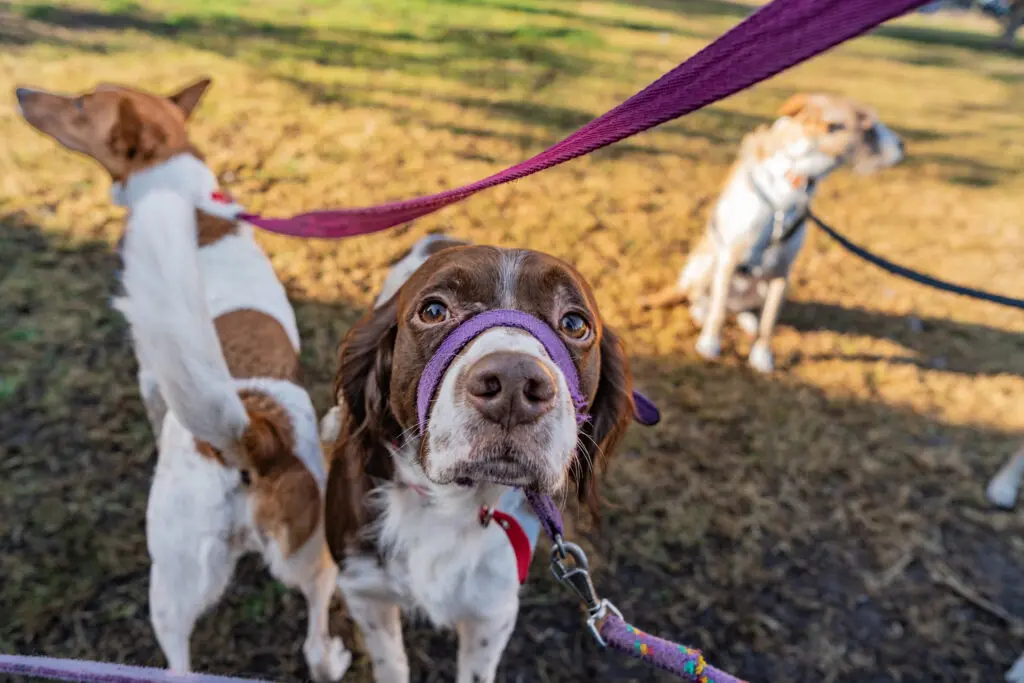
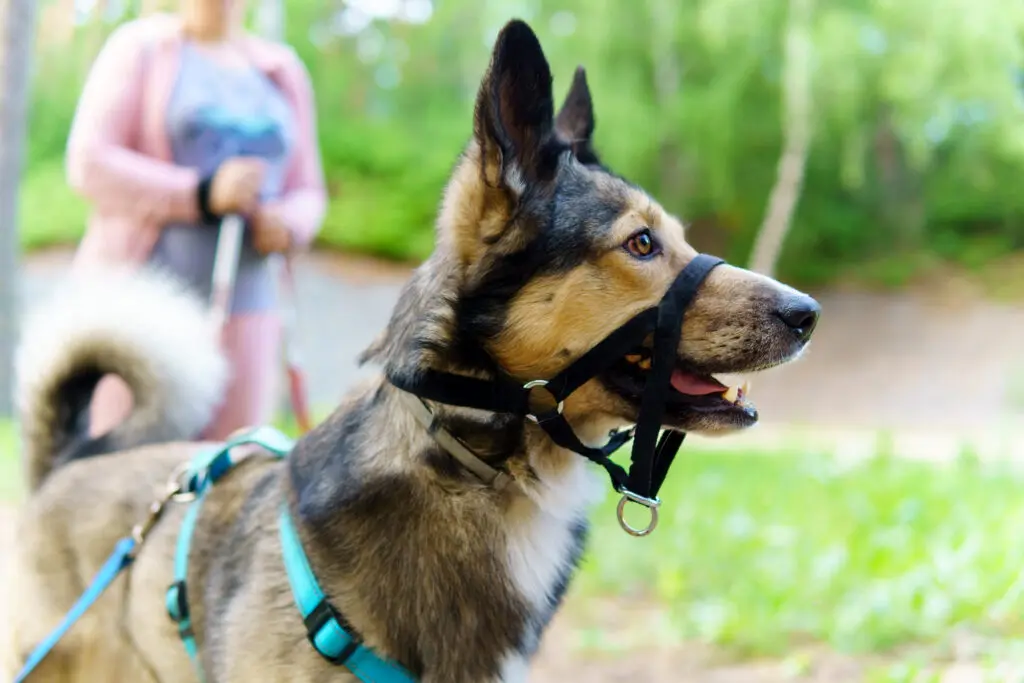
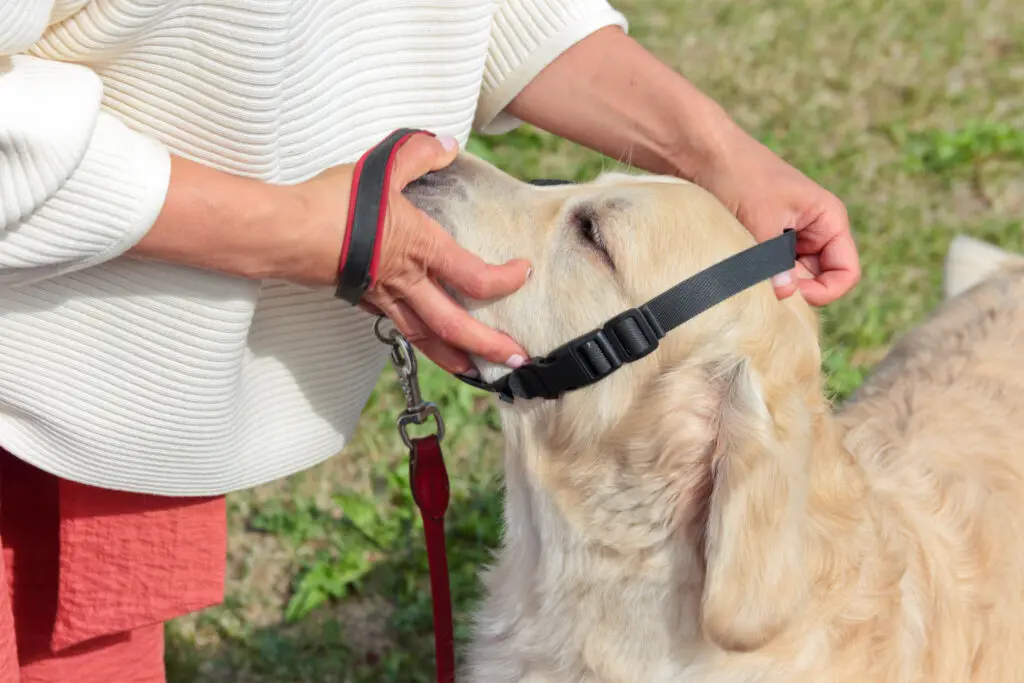
Once fitted, the headcollar should sit in its intended position, with straps lying flat, sitting snugly across the bridge of the nose and behind the ears, and still allowing your dog to pant and drink freely. A head collar sits around the muzzle and behind the head. When fitted correctly, it should give gentle control of the dog’s head without riding into the eyes.
Only once you know which headcollar you will be using does it make sense to think about the lead that will accompany it. This type is not suitable for flat-faced or brachycephalic breeds, and while some owners may compare it with a halti head collar, correct fit and product guidance matter most.
Check the Lead Attachment
Different headcollars can have different attachment arrangements, so check the instructions for your specific product.
Identify the designated lead attachment point or adjustable loop, and make sure your chosen lead is connected securely at that intended point.
The clip should attach easily and close fully. It should not be awkwardly oversized for the attachment point or so small that it is difficult to operate.
These details might seem minor, but they matter every time you get ready for a walk.
What Type of Dog Lead Do You Need?
Dog leads are available in various materials, lengths and designs.
Rather than choosing solely by appearance, think about how you usually walk your dog and, unlike a standard collar setup, choose a lead that suits how the headcollar is designed to provide gentle control.
For everyday pavement walks, many owners prefer a straightforward fixed-length lead that is easy to hold and manage. Other walking environments may lead you to choose something different. Anti-pull headcollars create gentle pressure and guide from the nose area, so they help redirect momentum and attention when a dog pulls and can also help reduce lunging. When fitted properly, they eliminate choking and tracheal damage during pulling.
Choosing the Right Training Lead Length
Why the Lead Handle Matters
Most attention goes to the dog end of a lead, but you will be holding the other end for the duration of the walk.
Look at the handle and consider whether it feels comfortable in your hand. Think about its width, material and construction.
This becomes particularly noticeable on longer walks or when you are wearing gloves in winter.
A well-matched lead and headcollar can help the handler keep a secure hold, especially with a strong dog, and may allow people with limited strength to manage safely.
A well-chosen headcollar paired with an uncomfortable lead is not a particularly well-matched set from the owner’s point of view.
Understanding Lead Clips
The clip is one of the most important components of a dog lead.
It connects the lead to the headcollar, collar or other designated attachment point and will be opened and closed repeatedly.
Check that it operates smoothly and closes completely. Inspect it regularly for wear or damage.
You should also consider its size and weight in relation to the rest of your walking equipment. Bigger does not automatically mean better.
Materials Matter
A headcollar and lead do not necessarily need to use identical materials, but thinking about how they perform together is worthwhile.
Consider weight, flexibility, weather resistance and cleaning. Comfort features such as padded straps can help reduce discomfort and chafing on sensitive skin while supporting a calming fit. A design that stays in place without riding up can also provide a comfortable and calming fit. Reflective stitching can also provide added safety in low light.
If you regularly walk in muddy areas, for example, equipment that is straightforward to clean may be more practical than something requiring extensive care after every wet walk.
For daily use, durability is another consideration. Look at the quality of the main materials as well as stitching and hardware, and make sure the headcollar is robust enough for your dog’s strength and regular use.
Should Your Headcollar and Lead Match?
Matching dog walking equipment is partly an aesthetic choice.
Some owners also compare headcollars with harnesses and prefer matching accessories across their walking kit, from dog collars to leads. Some owners prefer a coordinated headcollar and lead in the same colour or complementary styles. Others are interested purely in function.
There is no requirement for the two items to look identical. Compatibility, fit and suitability should come first.
That said, if suitable coordinating products are available, choosing a matching lead set can feel stylish without sacrificing practicality, but matching matters less than the difference between equipment that only looks coordinated and equipment that is genuinely compatible and practical.
Check Everything Before Walking
A quick equipment check before leaving home is a useful habit.
Check that the headcollar is fitted correctly and that straps have not become twisted. A correct fit also helps stop Dogmatic headcollars starting to ride up toward the dog’s eyes. Inspect the lead clip and confirm it is fully attached to the correct point.
Run your eye along the lead for obvious wear, damaged stitching or fraying.
These checks take seconds but are particularly useful with equipment that is used every day.
What About a Standard Collar?
A headcollar does not necessarily mean your dog’s standard collar becomes irrelevant.
Your dog may still wear other equipment for identification or as part of their usual setup. What is appropriate will depend on the products being used and applicable identification requirements. Different designs manage movement differently, with some intended to reduce pressure or avoid twisting around the neck. Owners may also be familiar with a halti style, but fit and use should still follow the guidance for the specific product.
Get in touch if you need advice on how the headcollar should be worn and whether it is designed to be used alongside other equipment.
For dog people, by dog people, because your dog deserves the best.