Why Does My Rescue Dog Pull on the Lead – and What Can Help?

Welcoming a rescue dog into your home can be incredibly rewarding. Whether they have come from a rehoming centre, a foster home or another family, they may need time to become familiar with their new surroundings and build trust with the people caring for them.

Every rescue dog is different. Some settle into their new routine quickly, while others may feel uncertain around unfamiliar people, dogs, noises, environments or walking equipment. Their previous experiences may be known, partly known or completely unknown, so it is important to treat them as an individual.
Walks can help your rescue dog explore the world, enjoy appropriate exercise and develop confidence with you.

However, early walks may also involve pulling, stopping, standing still, changing direction unexpectedly or becoming overwhelmed by unfamiliar situations.

At Dogmatic, our expertise lies in creating comfortable walking equipment that helps owners maintain greater physical control. We can help you choose, measure, fit and introduce suitable Dogmatic products while you and your rescue dog work towards calmer, more manageable walks.

Where pulling is connected to fear, reactivity, pain or behaviour that feels difficult to manage safely, support from an appropriately qualified trainer, behaviourist or vet may also be needed.

Hemi Brown Synthetic 1

Understanding Your Rescue Dog

The term “rescue dog” includes dogs of every possible breed, age, size and background. Some may have previously lived in a family home, while others may have been strays or received limited socialisation and lead-walking experience.

There is therefore no single personality or pattern of behaviour shared by every rescue dog. One dog may confidently investigate a new place, while another may need considerably more time before they feel safe enough to explore.

Your dog’s behaviour may also change as they settle in. A quiet dog who initially appears unaffected by unfamiliar people or other dogs may become more expressive once they feel secure in their new home.

This does not necessarily mean their behaviour has suddenly become worse; you may simply be learning more about their individual personality and responses.

Predictable routines, calm handling and time to rest may help a rescue dog feel more secure. Avoid expecting a perfect walk immediately. A short, comfortable outing can represent meaningful progress for a dog still adjusting to their new life.

Dogmatic cannot assess the reason for an individual dog’s behaviour. If you are concerned about persistent fear, stress, reactivity, aggression, pain or a significant behavioural change, speak to an appropriately qualified trainer, behaviourist or vet.

Why Is My Rescue Dog Pulling on the Lead?

A rescue dog pulling on the lead may be excited, following an interesting scent, trying to reach another dog or attempting to move away from something that worries them. Some rescue dogs may also have had limited previous experience of walking on a lead.

Dogs naturally move and explore at a different pace from people. Walking together with a loose lead is therefore a learned skill rather than something most dogs automatically understand.

Possible influences on pulling include excitement, fear, frustration, unfamiliar surroundings, interesting smells and limited previous lead training. Although the physical action may look similar, the reason behind it can vary considerably.

A dog pulling enthusiastically towards the park may need different support from one attempting to escape a frightening sound. Observing when your dog pulls, what they are moving towards or away from and how the rest of their body looks may help you understand the situation more clearly.

If pulling is accompanied by panic, persistent barking, lunging, attempts to escape or a sudden change in movement, prioritise safety and seek appropriate professional advice.

Andy Biggar Photography LTD Mw 90

Loose-Lead Walking: Helping Your Rescue Dog Walk Nicely

Loose-lead walking means helping a dog learn to move with their handler while the lead remains comfortably slack. It is a skill that may develop gradually through patience, consistency and suitable practice.

The aim does not need to be keeping your dog in one exact position throughout the entire walk. Dogs benefit from appropriate opportunities to sniff, explore and interact with the world around them without remaining under constant lead tension.

It may help to begin in a calm, familiar place, such as inside the house, in the garden or within another small area with limited distractions. Moments when your dog walks by your side or creates slack in the lead may be rewarded with praise, suitable food or the opportunity to stop and sniff.

Common loose-lead approaches include pausing when the lead tightens and continuing once it becomes slack again. Some owners also calmly change direction when their dog begins pulling.

Moving in the opposite direction may help prevent the dog from learning that pulling is the quickest way to reach something they want. Any movement should remain smooth and controlled, without jerking the dog’s collar or headcollar.

These are general loose-lead principles rather than individual training recommendations. The most appropriate approach will depend on the dog, their previous experiences and the reason they are pulling.

Keeping each stage short and manageable may make practice feel less overwhelming. A few successful minutes can still represent useful progress, particularly if your rescue dog struggles within a busier environment.

Every rescue dog learns at a different pace. Consistency and patience are important, but progress should always be judged according to the individual dog.

If pulling appears connected to fear, stress or reactivity, an appropriately qualified trainer or behaviourist can provide individual guidance.

Gracie PCW Purple

What If My Rescue Dog Reacts to Other Dogs?

Some rescue dogs may bark, lunge, freeze, pull or become intensely focused when they encounter other dogs, unfamiliar people, vehicles, wildlife or particular sounds.

These responses can have different causes, including excitement, fear, frustration or feeling overwhelmed. Reactivity does not automatically mean a dog is aggressive, but the reason for an individual dog’s reaction cannot be determined through general online information.

Avoid assuming that your rescue dog wants to greet every potential canine friend. Creating more distance, choosing quieter walking routes and avoiding forced greetings may help some dogs feel more comfortable.

Correctly fitted walking equipment can give an owner greater physical control, but it will not resolve the reason behind reactive behaviour.

Persistent or intense reactions should be discussed with an appropriately qualified trainer or behaviourist who can observe the dog and provide individual guidance.

Choosing Comfortable, Correctly Fitted Walking Equipment

When walking a new rescue dog, you may not yet know how they will respond to traffic, loud noises, wildlife, unfamiliar people or other dogs.

Some dogs move backwards, twist their bodies or change direction suddenly when startled. Correctly measured and fitted equipment can help you maintain comfortable physical control while you learn more about your dog.

Walking a large or powerful dog on their collar alone may feel physically difficult when they pull. Repeated pulling can also place uncomfortable pressure around the dog’s neck.

Before developing the Dogmatic Headcollar, Susan Lewsley tried different walking equipment with her own Dobermanns. She found that they could put their weight against the harnesses she tried and continue pulling, while the headcollars available at the time rode towards their eyes, rubbed their faces and did not provide the comfortable control she needed.

This experience led Susan to develop the registered Dogmatic design as an alternative for owners who need greater physical control without relying entirely on their own strength.

Whichever Dogmatic equipment is selected, it should be correctly measured, fitted and checked regularly for signs of rubbing, discomfort or damage.

Before each walk, check the fit of every item and ensure that all clips, fastenings and attachment points are secure and free from damage.

Choose a lead length that suits the environment and does not provide more freedom than you can safely manage, particularly near roads or within busy public places.

Gracie Brown Synthetic 3
dogmatic10
Wilma 02

Can a Rescue Dog Wear a Head Collar?

Many rescue dogs can wear a head collar when it is suitable for the individual dog, correctly measured and introduced gradually.

A head collar can be particularly helpful when a large or powerful dog pulls, lunges or changes direction unexpectedly. Guiding the dog’s head may give the handler greater physical control without requiring them to rely entirely on strength.

A headcollar should never be used to drag a dog forwards or sharply pull their head or neck. Because you may not know whether your rescue dog has previously worn equipment around their face, allow time for a calm and gradual introduction.

If your dog shows persistent fear or distress, pause the introduction and seek suitable individual guidance rather than forcing them to continue.

How Can a Dogmatic Headcollar Help?

The Dogmatic Headcollar was developed by Susan Lewsley after the headcollars she tried on her own Dobermanns rode towards their eyes, rubbed their faces and did not provide the comfortable control she needed.

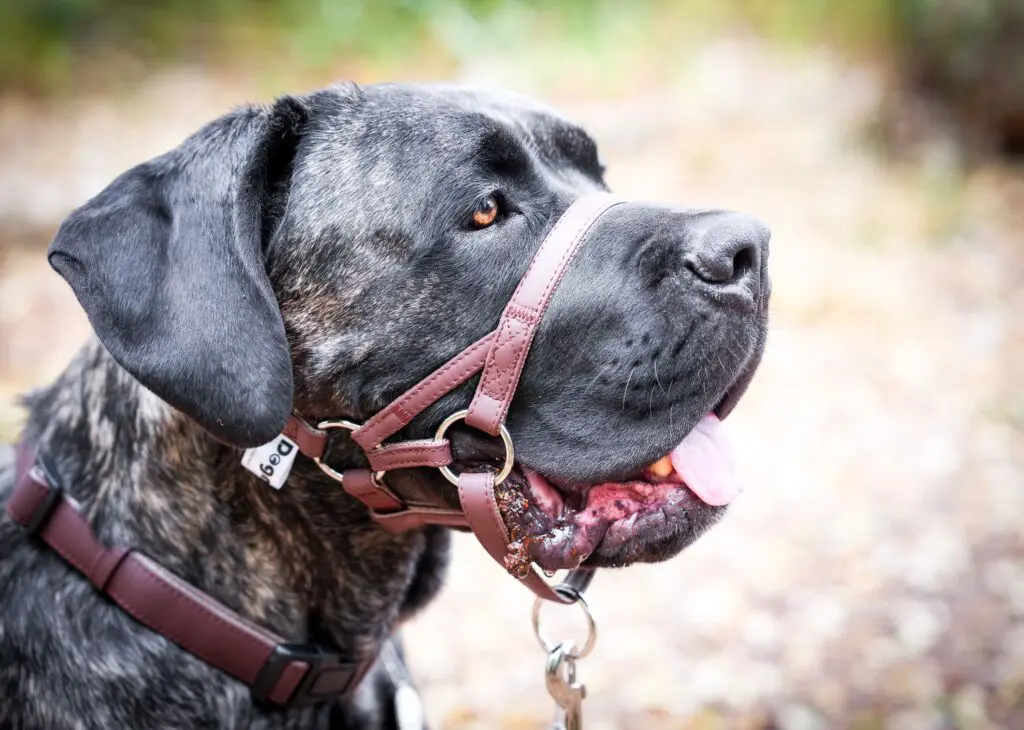
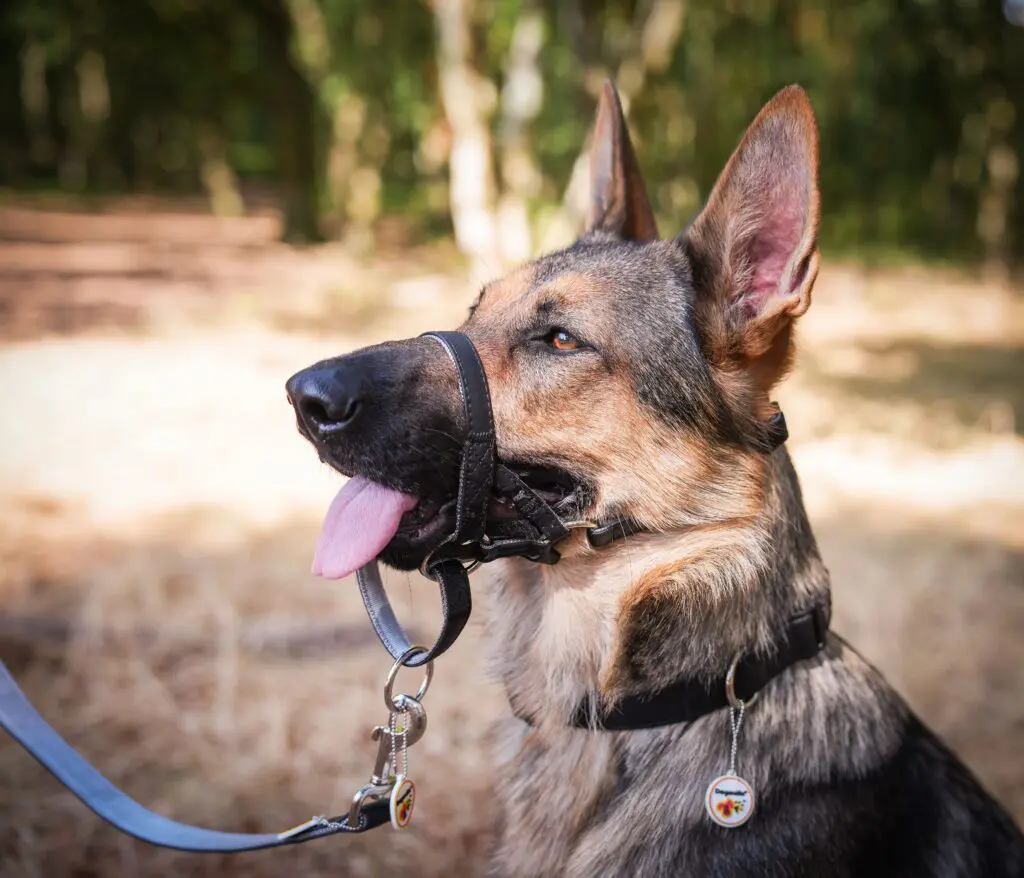
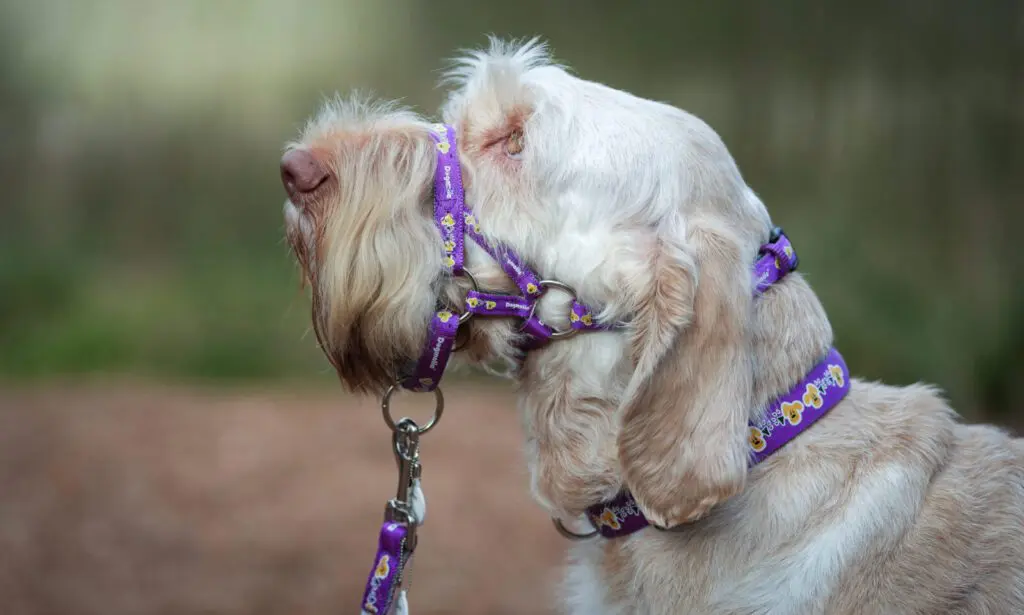
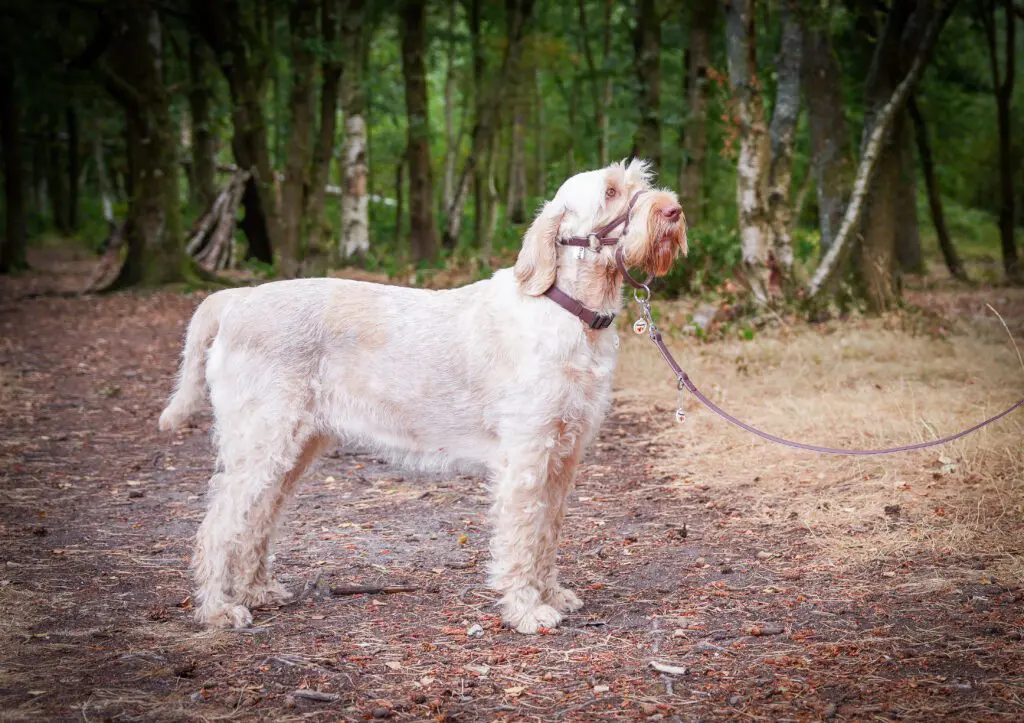
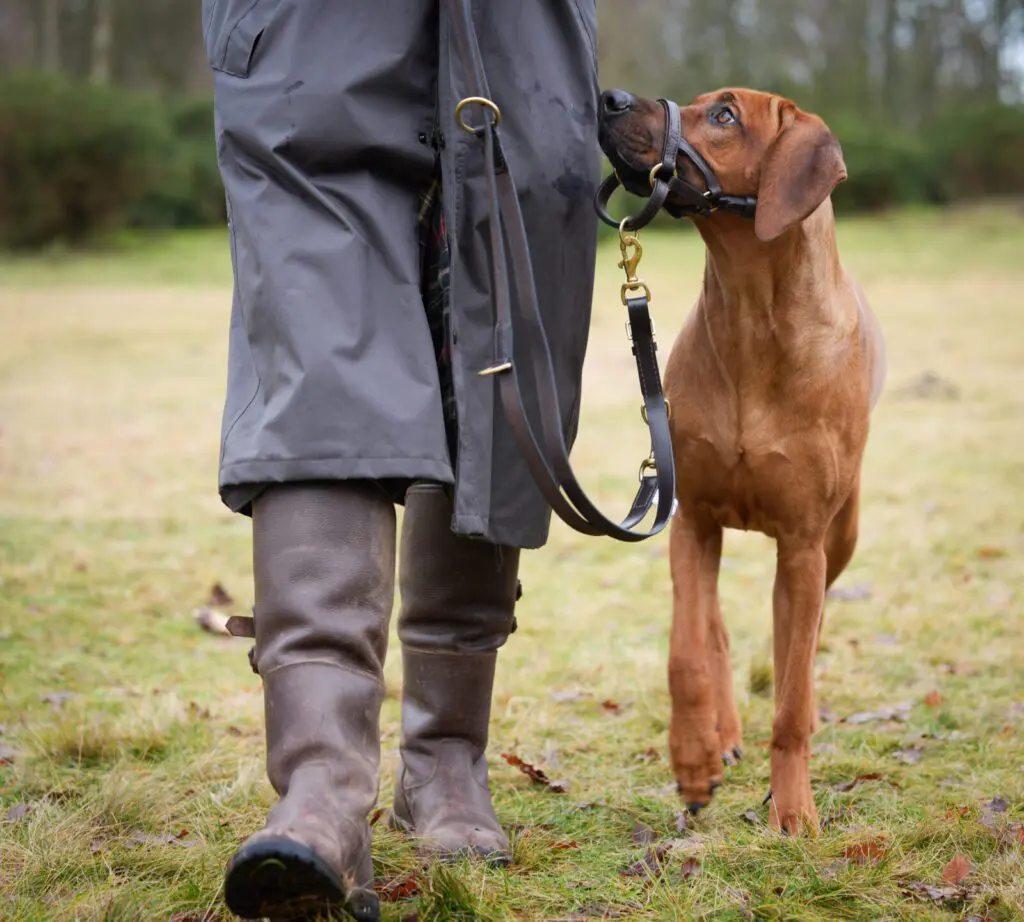
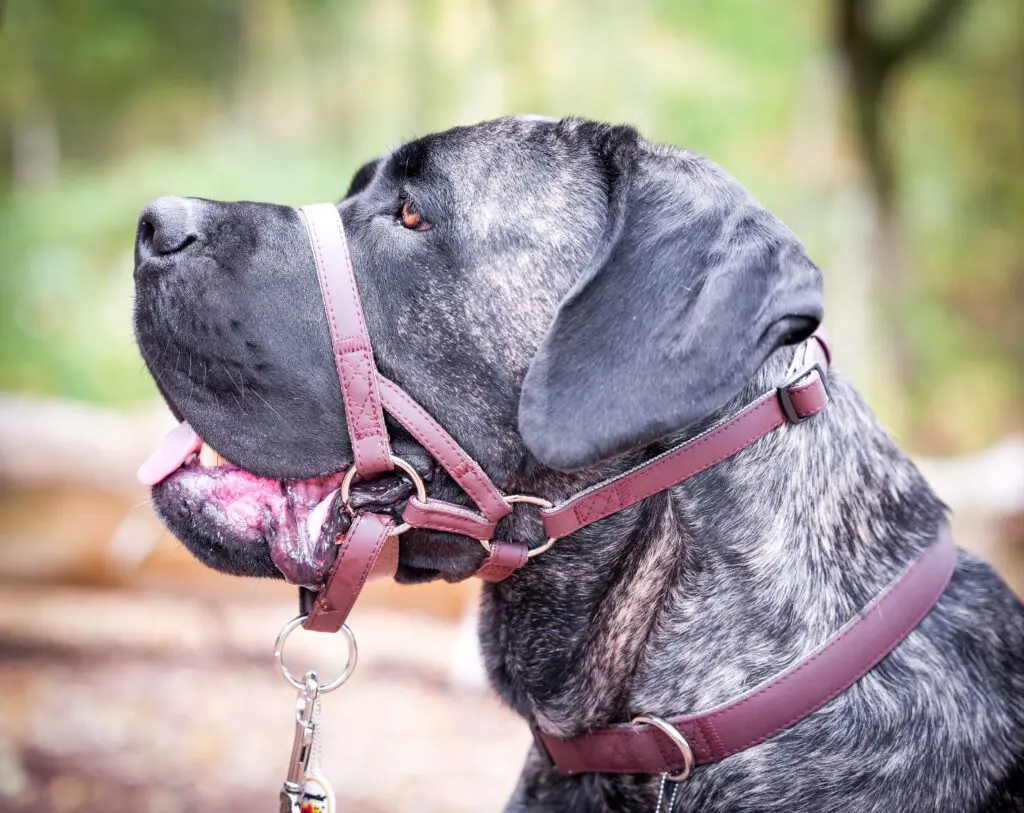
When correctly measured and fitted, the registered design helps the headcollar remain comfortably away from the dog’s eyes. The straps at the sides and beneath the chin help keep it securely positioned, while the independent loop beneath the chin allows free movement.

The Dogmatic Headcollar does not tighten or pull across the face. Your dog can still open their mouth, pant, drink, yawn and accept a suitable treat while wearing it.

The lead connects to the independent loop beneath the chin rather than attaching directly to the dog’s nose. This allows the owner to guide the direction of the dog’s head and maintain greater physical control when they pull or change direction.

For rescue-dog owners, a correctly fitted Dogmatic Headcollar may be particularly useful when walking on the dog’s collar alone feels physically difficult. It can help the handler manage strong or sudden movements while becoming more familiar with the dog’s walking behaviour.

A Dogmatic Headcollar is a walking and control aid rather than a behavioural treatment. It cannot determine or address the underlying reason why an individual dog pulls.

Used appropriately, however, it can make walks feel more manageable while owners practise loose-lead walking or seek professional support where needed.

Dogmatic is the “Headcollar of Choice” at Birmingham Dogs Home and is also used within branches of the RSPCA, Battersea, Woodgreen, Dogs Trust and Guide Dogs.

What Size Headcollar Does a Rescue Dog Need?

“Rescue dog” is not a breed or sizing category. Even dogs that appear very similar can have different muzzle lengths, head widths and neck measurements.

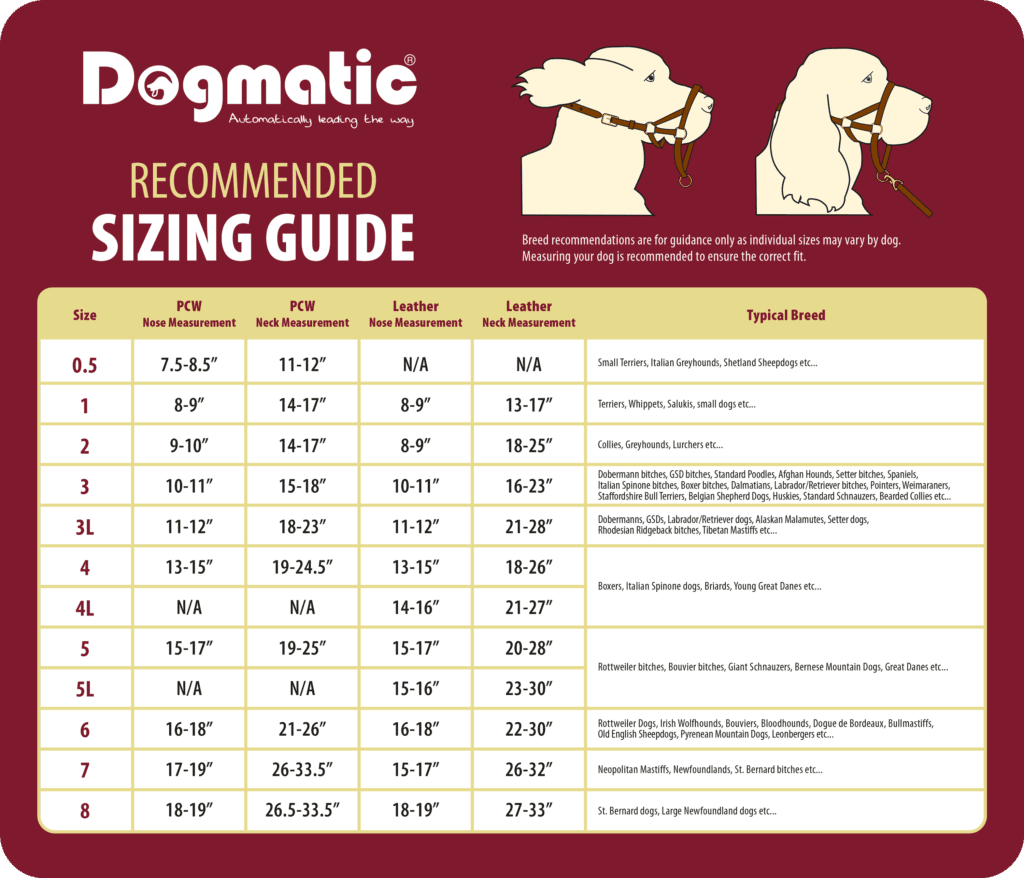
Do not select a Dogmatic size using your dog’s approximate weight, appearance or assumed breed alone. The individual dog should always be measured using the official Dogmatic Sizing Guide.

If you are unsure, the Dogmatic team can provide personal sizing assistance. Accurate measurements and clear photographs allow us to consider the dog’s individual head shape rather than relying on a general breed recommendation.

Please send the measurements requested in our sizing guide, together with a clear photograph of your dog from the front and another from the side. You can also include any useful information you have about their breed or breed mix.

If your rescue dog feels worried about being measured, avoid forcing or heavily restraining them. Allow additional time for calm handling or ask an appropriate professional for support.

Dogmatic Sizing Guide 2022 1

What Is the Best Lead for a Rescue Dog?

The best lead for a rescue dog depends on their size, strength, walking equipment and behaviour, as well as the level of control the handler needs.

A small dog walking calmly in a quiet setting may have very different requirements from a large, powerful dog that pulls or changes direction suddenly.

The environment also matters. A lead length suitable for an open space may not be appropriate beside a road or within a busy public place.

Choose a lead that feels comfortable in your hand, provides a secure connection and allows you to maintain control without keeping your dog under constant tension.

Hemi Brown Synthetic

Padded Cushioned Webbing Lead

The Dogmatic Padded Cushioned Webbing Lead is padded throughout to provide a comfortable option for everyday walks. Its padded construction offers a secure, comfortable grip without placing unnecessary pressure on the owner’s hand.

It can be coordinated with a Dogmatic Headcollar or collar and may suit rescue dogs that can be managed comfortably from a single connection point.

The Dogmatic Training Lead is a double-ended lead that provides flexible lengths and connection options for different walking situations.

It can be attached to two suitable connection points, such as a Dogmatic Headcollar and the dog’s normal collar. This may provide additional handling reassurance when walking an unfamiliar, strong or reactive rescue dog.

The Training Lead can also be adjusted to different lengths. Until you understand how your rescue dog responds to their surroundings, avoid giving them more lead length than you can safely manage.

Additional freedom can be introduced gradually as their confidence and walking behaviour become more familiar.

A 2m or 6ft Training Lead can provide useful flexibility during loose-lead walking, but it is not the universally correct working length for every dog or situation.

The safest length depends on the dog, handler and walking environment. Near traffic or within a busy area, the lead may need to be held at a shorter, more manageable length.

Using two connection points does not make the walking setup escape-proof. Both pieces of equipment must fit correctly, each clip must be secure and the complete setup should be checked before every walk.

Introducing Your Rescue Dog to a Headcollar

A dog that has never worn equipment around their face may need time to become comfortable with a headcollar. Putting it on for the first time immediately before a long or busy walk could feel overwhelming.

Begin at home or in another calm, familiar environment. Allow your dog to investigate the headcollar and create positive associations using praise, play or a tasty treat they enjoy.

The introduction should progress at a pace that suits the individual dog. This might begin with allowing them to move their nose towards or through the opening before the headcollar is briefly fastened and removed again.

The length of time it is worn can then be increased gradually. Once your dog appears comfortable indoors, you may be able to progress to the garden or another quiet area before attempting a short walk with limited distractions.

These are general introduction principles rather than an individual training programme. Some dogs may require additional support, particularly if they appear worried about equipment being placed around their face.

Check the fit before every use. Do not leave your dog unattended while wearing a headcollar, and never jerk, drag or sharply redirect them using the lead.

If your dog remains distressed, pause the introduction and seek appropriate support rather than forcing them to continue.

Wilma pic 1
Andy Biggar Photography LTD Mw 49 scaled

When Might Professional Support Be Needed?

General walking information can provide a helpful starting point, but some rescue dogs will need individual support from an appropriately qualified professional.

This is particularly important when behaviour is intense, persistent or creates a safety concern. A trainer, behaviourist or vet can consider factors that Dogmatic cannot assess through product guidance or online content.

Consider seeking professional advice if your rescue dog regularly panics or freezes outside, reacts intensely to dogs or people, attempts to escape from their equipment or displays behaviour you do not feel able to manage safely.

A veterinary check may also be appropriate if your dog’s behaviour changes suddenly, they appear to be in pain or they become reluctant to wear walking equipment.

Dogmatic can help with the design, selection, measuring, fitting and introduction of our products. An individual dog’s health or behaviour should be assessed by an appropriately qualified professional.

Why Rescue-Dog Owners Choose Dogmatic

Dogmatic has spent more than two decades helping dogs and their owners enjoy more comfortable, manageable walks.

Our registered headcollar design was created from Susan Lewsley’s experience with her own dogs and her determination to develop an alternative to headcollars that rode towards the eyes or rubbed across the face.

Today, Dogmatic remains a family-run company. Our headcollars are available in Padded Cushioned Webbing, Synthetic Leather and Signature Leather, with coordinating collars and leads.

Dogmatic is the “Headcollar of Choice” at Birmingham Dogs Home and is also used within branches of the RSPCA, Battersea, Woodgreen, Dogs Trust and Guide Dogs.

We understand that choosing equipment for a rescue dog may feel difficult when you are still learning about their size, strength and walking behaviour. That is why our friendly team provides personal product and sizing support before and after your purchase.

Building Confidence Together

Helping a rescue dog become more comfortable on the lead may take time. Your dog might walk calmly one day but find it harder to focus within a busier or unfamiliar environment.

Progress does not always happen in a straight line. Small moments still matter, whether that means walking briefly with a loose lead, passing a distraction more comfortably or completing a walk that feels more manageable than the last.

Dogmatic can help you find comfortable, correctly fitted walking equipment that provides greater physical control while you and your rescue dog build confidence together.

If you are unsure which Dogmatic Headcollar or lead would suit your dog, send our team their measurements and clear photographs. We will be happy to provide personal product and sizing guidance.

Andy Biggar Photography LTD Mw 34 4 scaled

Frequently Asked Questions

Why Is My Rescue Dog Pulling on the Lead?

A rescue dog pulling on the lead may be excited, following a scent, trying to reach something interesting or attempting to move away from a situation that worries them.

Some rescue dogs have also had limited experience of walking on a lead or wearing unfamiliar equipment.

Observe when the pulling happens, what your dog is moving towards or away from and what their wider body language suggests. A dog pulling enthusiastically towards a familiar walking route may require different support from one who appears frightened or is trying to escape.

If your rescue dog’s pulling is accompanied by panic, persistent barking, lunging, freezing or attempts to escape, seek advice from an appropriately qualified trainer, behaviourist or vet.

General loose-lead approaches include rewarding moments when the lead remains slack, pausing when it becomes tight and practising within a calm area with limited distractions.

Praise, play, suitable food or the opportunity to stop and sniff may make practice feel more positive. Once your dog becomes comfortable within a familiar setting, you can slowly increase the duration and introduce slightly more distracting environments.

Consistency is important, but the most appropriate approach will depend on the individual dog and why they are pulling. These are general principles rather than a personalised training programme.

A correctly fitted Dogmatic Headcollar is designed to provide greater physical control when a dog pulls, lunges or changes direction unexpectedly.

It allows the handler to guide the dog’s head without relying entirely on physical strength. The lead connects to the independent loop beneath the chin and does not attach directly to the dog’s nose.

The Dogmatic Headcollar is a walking and control aid rather than a behavioural treatment. It may be used alongside patient loose-lead practice and professional support where appropriate.

The Dogmatic Headcollar was developed from Susan Lewsley’s experience of trying to find comfortable walking equipment for her own Dobermanns.

Susan found that her dogs could put their weight against the harnesses she tried and continue pulling. The headcollars available at the time also rode towards their eyes, rubbed their faces and failed to provide the comfortable control she needed.

This led Susan to develop the registered Dogmatic Headcollar design. It allows the lead to connect beneath the chin so the handler can guide the direction of the dog’s head and maintain greater physical control.

A correctly measured and fitted head collar may help an owner maintain greater physical control when a rescue dog pulls or lunges.

Its suitability depends on the individual dog, their walking behaviour and how comfortably they respond to equipment around their face.

A headcollar will not address the underlying reason for reactivity. Persistent barking, lunging, freezing, panic or attempts to escape should be discussed with an appropriately qualified trainer or behaviourist.

If the behaviour has appeared suddenly or your dog appears uncomfortable or in pain, speak to a vet.

The best lead depends on the dog’s size, strength, walking behaviour, equipment and environment. A padded everyday lead may suit some dogs, while a Dogmatic Training Lead may provide greater flexibility and additional connection options.

The Dogmatic Training Lead is a double-ended lead. It can be attached to a Dogmatic Headcollar and the dog’s normal collar, allowing guidance to be shared between two suitable connection points.

Choose a working length that permits comfortable movement without providing more freedom than you can safely manage. The lead may need to be held shorter near roads, other dogs or busy public areas.

Yes. The double-ended Dogmatic Training Lead can be attached to a Dogmatic Headcollar and the dog’s normal collar.

Using two suitable connection points may provide additional handling reassurance when walking an unfamiliar, strong or reactive rescue dog.

Both products must fit correctly. Check every clip, fastening and attachment point before each walk, and remember that no walking setup can be guaranteed to prevent escape.

Introduce the headcollar gradually within a calm, familiar environment. Allow your dog to investigate it and use praise, play or suitable food to create a positive association.

Begin with very short periods. Once your dog appears comfortable, slowly increase how long the headcollar is worn before moving into a more distracting environment.

Do not leave your dog unattended while wearing the headcollar. If your dog remains distressed, pause the introduction and seek appropriate individual guidance rather than forcing them to continue.

There is no fixed timescale. Some dogs begin to show progress quickly, while others may need weeks or months of consistent practice.

Previous experiences, confidence, motivation and the walking environment can all influence how readily a dog learns.

Progress may not be completely linear. Your dog may walk comfortably within a quiet area but find it more difficult near traffic, unfamiliar people or other dogs.

Keep each stage realistic and recognise small improvements. If your dog continues to struggle or their pulling appears related to fear or reactivity, seek individual support from an appropriately qualified professional.

Rescue puppies and young dogs have individual fitting and handling requirements. Do not choose a Dogmatic Headcollar based only on age, weight, appearance or assumed breed.

Measure the individual dog using the official Dogmatic Sizing Guide and contact the Dogmatic team if you are unsure.

The headcollar should be introduced gradually and its fit checked regularly as the young dog grows.

Measure your dog using the official Dogmatic Sizing Guide rather than selecting a size based only on their weight, appearance or assumed breed.

If you are unsure, send the Dogmatic team the requested measurements and clear photographs taken from the front and side. We can then provide personal sizing guidance based on your individual dog.

The fit should be checked regularly, particularly if your rescue dog is still growing or their weight and physical condition are changing.

Dogmatic

Privacy Overview

This website uses cookies so that we can provide you with the best user experience possible. Cookie information is stored in your browser and performs functions such as recognising you when you return to our website and helping our team to understand which sections of the website you find most interesting and useful.